

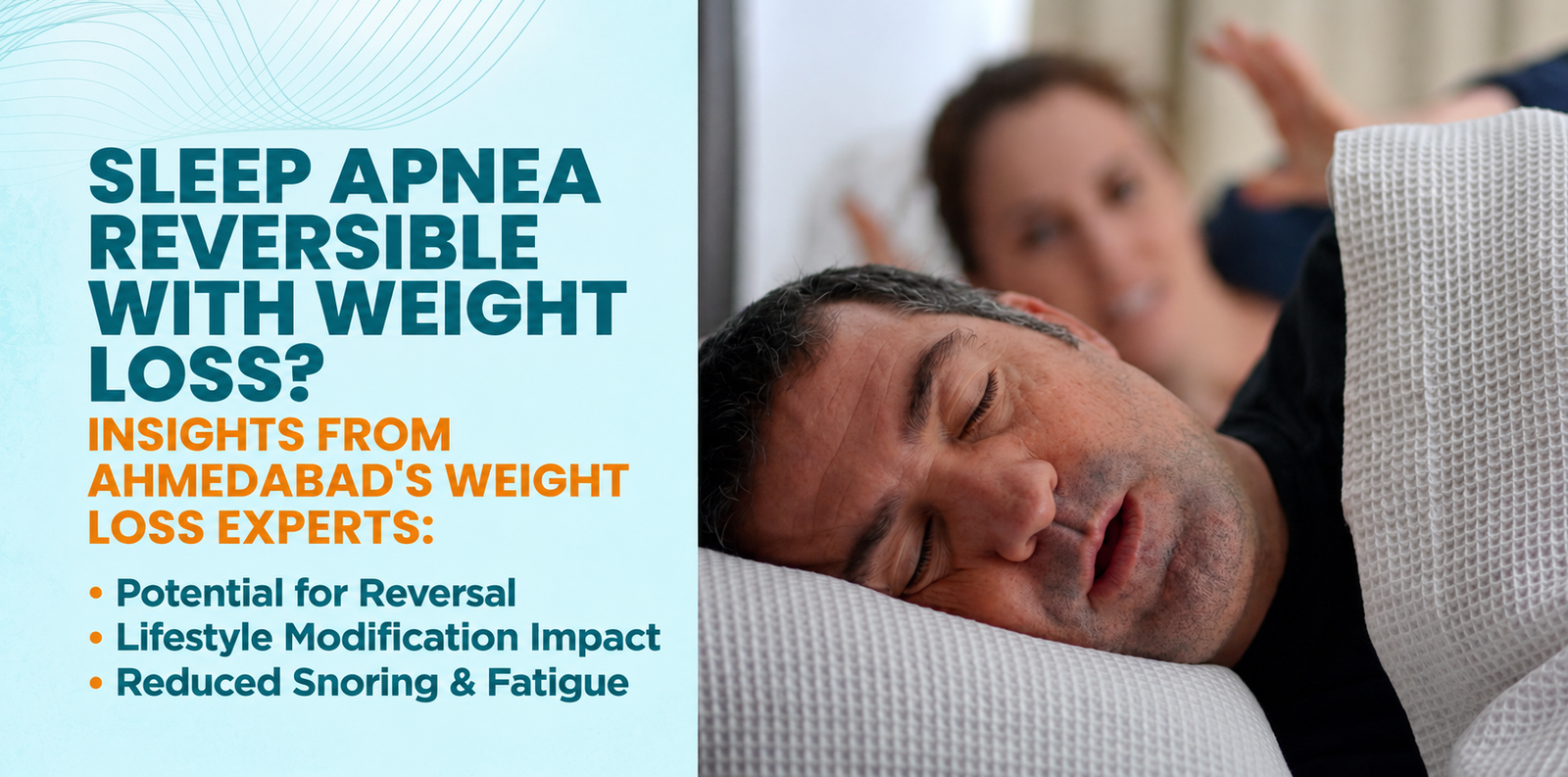
Waking up gasping for air, feeling like a zombie throughout the workday, and hearing complaints from your partner about “earth-shaking” snoring—these are the hallmarks of Obstructive Sleep Apnea (OSA). For many, the diagnosis feels like a life sentence to a CPAP machine.
However, at Ansh Obecure, we often see a common thread: a significant number of our patients struggling with sleep apnea are also navigating the challenges of excess weight. As we’ve discussed in our guide on how weight loss affects joint pain, the impact of carrying extra pounds isn’t just limited to your knees and hips; it affects your internal respiratory mechanics too.
But the burning question remains: Is sleep apnea actually reversible with weight loss? Can you truly “shed” the mask by shedding the weight?
In this comprehensive guide, we dive into the science of airway obstruction, the “tongue fat” factor, and how targeted weight management in Ahmedabad can lead you back to restful, natural sleep.
The Biological Link: Why Weight Matters to Your Airway
To understand if weight loss can reverse sleep apnea, we first must understand why weight gain causes it in the first place.
Obstructive Sleep Apnea occurs when the soft tissues in the back of your throat collapse during sleep, physically blocking the passage of oxygen. When you carry excess weight, several physiological changes occur:
- Pharyngeal Narrowing: Fat deposits (adipose tissue) accumulate around the neck and the walls of the pharynx. This physically narrows the “tube” through which you breathe, making it much more likely to collapse when your muscles relax at night.
- The Tongue Fat Factor: Recent research has highlighted that the tongue itself stores fat. An enlarged, fatty tongue takes up more space in the oral cavity, sliding back during sleep and acting like a cork in a bottle.
- Decreased Lung Volume: Abdominal fat (visceral fat) pushes up against the diaphragm. This reduces the functional residual capacity of the lungs, meaning there is less “upward tension” on the trachea to keep the airway taut and open.
Can Weight Loss “Cure” Sleep Apnea?
The short answer is: For many people, yes—or it can at least significantly reduce the severity.
Clinical studies consistently show that weight loss is the most effective lifestyle intervention for OSA. According to various medical reviews:
- A 10% reduction in body weight can lead to a 50% improvement in the Apnea-Hypopnea Index (AHI)—the scale used to measure sleep apnea severity.
- For patients with mild to moderate OSA, losing 15% or more of their body weight often leads to complete clinical remission, where they no longer meet the diagnostic criteria for the disorder.
At Ansh Obecure, we view weight loss not just as an aesthetic goal, but as a primary medical treatment for respiratory health.
The Benefits: What Happens When You Lose Weight?
When you embark on a structured weight loss journey, your sleep quality undergoes a transformation. Here is what you can expect as the pounds come off:
1. Reduced Airway Collapsibility
As you lose systemic fat, the fat pads surrounding your airway shrink. This increases the diameter of your throat, reducing the “suction” effect that causes the airway to snap shut during inhalation.
2. Improved Blood Oxygen Levels
With a clearer airway, your blood oxygen saturation stays stable throughout the night. This prevents the “fight or flight” response your body triggers every time it stops breathing, leading to a lower heart rate and less strain on your cardiovascular system.
3. Energy “Interest” Returns
One of the cruelest cycles of sleep apnea is that it makes you too tired to exercise. By losing the first 5-10% of weight and improving sleep, you regain the energy needed to stay active, which further accelerates your weight loss.
Is it Reversible for Everyone?
While weight loss is a “miracle drug” for many, it is important to manage expectations. Whether your sleep apnea is fully reversible depends on several factors:
- Anatomy: Some individuals have a naturally narrow jaw, a large uvula, or a deviated septum. If your OSA is caused by bone structure rather than just fat, weight loss will help but may not “cure” it.
- Severity of Baseline OSA: If you start with “very severe” sleep apnea (over 30 events per hour), you may move down to “mild” after weight loss. While this is a massive health victory, you might still require some form of therapy.
- Age and Muscle Tone: As we age, the muscles in our throat naturally become floppier. Even a lean person can develop sleep apnea if their muscle tone is low.
Strategies for Weight Loss-Driven Sleep Apnea Remission
If you are in Ahmedabad and looking to reverse your sleep apnea, a “crash diet” isn’t the answer. At Ansh Obecure, we emphasize a holistic, medically-supervised approach.
1. Medical Weight Management
For those with severe OSA, traditional exercise can be dangerous due to heart strain. We provide supervised plans that focus on metabolic health first, ensuring you lose fat while protecting your heart.
2. Nutritional Synergy
Inflammation plays a huge role in airway swelling. A diet rich in anti-inflammatory foods (similar to the ones we recommend for joint pain relief) can help reduce the swelling in the throat tissues.
3. Positional Therapy & CPAP Transition
As you lose weight, your CPAP pressure requirements will change. We work with patients to monitor their progress, often reducing the “pressure” of the machine until it is no longer needed.
Why Maintenance is Key
The “reversibility” of sleep apnea is contingent on maintaining the weight loss. Studies show that if the weight returns, the sleep apnea often returns—sometimes even more severely than before.
This is why our programs in Ahmedabad focus on Behavioral Modification. We don’t just want you to lose weight for a wedding or an event; we want you to breathe freely for the rest of your life.
Frequently Asked Questions
Q: How much weight do I need to lose to stop using my CPAP?
A: Every body is different, but typically a loss of 15% of your total body weight is the threshold where doctors begin to re-evaluate the need for a CPAP machine.
Q: Does exercise alone help sleep apnea?
A: Yes! Interestingly, exercise has been shown to reduce sleep apnea severity even before significant weight loss occurs, likely due to improved muscle tone in the upper airway and reduced fluid retention in the neck.
Q: Can I just get surgery instead of losing weight?
A: While surgeries exist to trim airway tissue, they have lower success rates than sustained weight loss. In fact, many surgeons require patients to lose weight before surgery to ensure a safer recovery and better results.
Final Thoughts: Take the First Step to a Restful Night
If you are tired of being tired, remember that your weight and your sleep are two sides of the same coin. By addressing the root cause—excess adipose tissue—you aren’t just fitting into smaller clothes; you are quite literally clearing the path for the oxygen your brain and heart crave.
At Ansh Obecure (Ahmedabad), we specialize in helping patients navigate this journey. Whether you are dealing with joint pain, metabolic issues, or sleep apnea, our expert team is here to provide the roadmap to a lighter, healthier, and more rested you.
Ready to wake up refreshed? Contact Ansh Obecure today to learn more about our medical weight loss programs.
Disclaimer: This article is for informational purposes and does not substitute for professional medical advice. Always consult with a sleep specialist or a weight loss expert before making changes to your CPAP therapy or starting a new weight loss regimen.

- Gastric Sleeve vs. Gastric Bypass: Which Weight Loss Surgery in Ahmedabad Suits You? - September 28, 2026
- What Is the Actual Cost of Bariatric Surgery in Ahmedabad? Full 2026 Price Breakdown - September 14, 2026
- Bariatric Surgery vs Ozempic & GLP-1s: Which Is Right for Long-Term Weight Loss? - August 30, 2026
